How our farm opened its gates
At first there was no plan, just a lot of animals and the wish to share them. This is how our farm became what it is, told largely in Marielle’s words.
A childhood among animals
Marielle has always lived among animals. As a little girl she had a pony, and her father kept chickens and rabbits. She went riding.
Children came into her life when she met Olivier. She had started studying to become a specialist educator but stopped when her first son was born. Today her work brings the two together: animals and children.
“When I was little I had a pony. My dad had chickens and rabbits. I grew up with animals and I’ve always loved them.”
Not like the farms she knew
For a long time Marielle had sworn never to open an educational farm. In the ones she had seen, the enclosures were too small, children walked in without knowing how to behave, and the animals were not always treated with respect.
That was the only model she knew. So we chose to do it differently.
“I’d always said I would never run an educational farm, because the ones I’d seen had tiny enclosures. […] But I’m trying to do it differently.”
Wednesdays, a few children
It all began without a plan. We had a lot of animals and thought other people might enjoy them too. On Wednesdays two, three or four children came, and at weekends a few families passing through.
Each child found the animal that suited them. Parents told us they felt they had their child back. We took on more animals and organised more and more visits.
“We started with visits for children: two, three, four children on Wednesdays, and at weekends a few families passing through.”
Opening our farm
Next came children and adults with disabilities, then children in care, some without a family or unable to live with their parents. Sometimes we take them in at short notice. We want them to feel at home.
Institutions and professionals asked us for more and more stays. Alongside visits of an hour or two, we began hosting people for several days. We also have our own six children, so we look after everyone.
“The project grew naturally. First we began to welcome children with disabilities. Then adults with disabilities came too.”
The animals come first
Here the animals are not at the visitors’ disposal. You don’t touch them just because you feel like it: you learn to approach them, watch them and recognise what they need.
The animal’s consent is at the heart of what we do, along with caring for nature. That is what sets us apart from the farms Marielle used to know.
A life’s project
We have plenty of ideas for the future, but first we want to finish what we have started. For me, Marielle, what matters most is that the farm carries on, even when I am no longer the one running it.
“A life’s project. Mine, and other people’s.”
A few questions
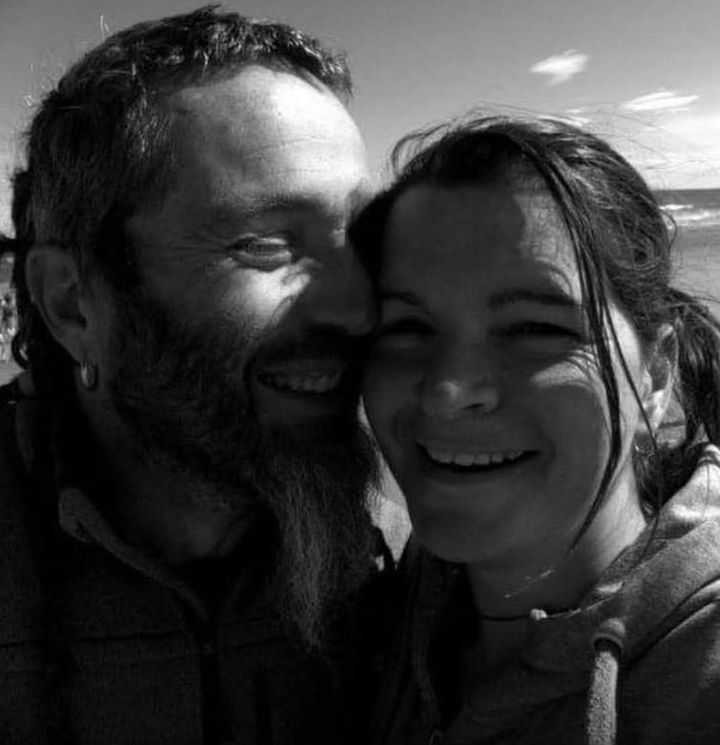
Olivier and Marielle on the farm, the animals and the children.
- How did it all start?
- We had a lot of animals, and we said to ourselves: we might as well let other people enjoy them. We started with a few visits, two, three, four children on Wednesdays, and a few families passing through at weekends. Then we saw how much children, and their parents too, needed to get out, be in nature and breathe some fresh air.
- Why animals and children?
- I always grew up with animals: as a little girl I had a pony, and my dad kept hens and rabbits. And I was training to be a special needs educator when I had my first child. With the work I do now, I have both the animals and the children. And that suits me very well.
- What changes in the children?
- With the animals, it works straight away. Each child finds the animal that suits them. Professionals who work with disabled or autistic children tell us they see a remarkable change in behaviour here.
- And day to day, what do you notice?
- With some disabled children, there was no participation at the start of the year, and by the end of the year there was participation and interest. Very hyperactive children who can’t be managed in their usual setting simply play here. Because it’s outdoors: they can run without bothering anyone.
- What are you working on next?
- First, making the place secure and improving what needs improving, such as some of the enclosures, so we can take in more animals. We are short of space. And then there are the projects waiting their turn: a natural pool for water activities, a woodland trail to discover wild animals, a barefoot path, an earth and straw play area, dens.
- How do you see the farm in a few years?
- With everything I have in my head finished. And I’d like it to carry on and never stop, even when I’m no longer the one looking after it.
- In a word?
- A life’s project. Mine, and other people’s.